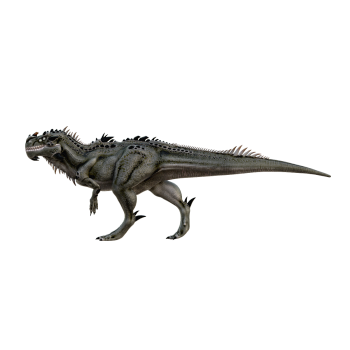
Sci Fi Four eyed Tyrannosaurus Rex (with action 3D model)
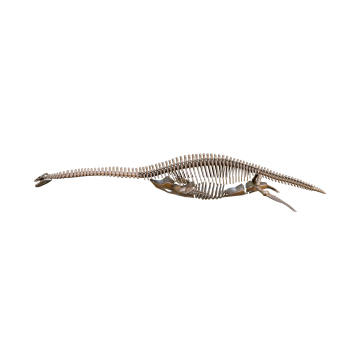
Fossil skeleton of plesiosaur
Plesiosaur is a collective term for the extinct marine reptiles of the genus Plesiosaur, belonging to the suborder Diptera and the order Pterosauriformes. It is a group adapted to living in shallow water environments, with large individuals and long necks, hence its name. It began to appear in the late Triassic period and spread all over the world by the Jurassic period, and became extinct by the end of the Cretaceous period. The plesiosaur were incredibly large in size and ruled the oceans of the Mesozoic era alongside ichthyosaurs. Its living habits are similar to modern sea lions, mainly living in the ocean and feeding on fish. It can be divided into long necked plesiosaurs and short necked plesiosaurs. Survived from Jurassic to Cretaceous.

Fossil skull of Archaeopteryx
Archaeopteryx is a dinosaur belonging to the family Archaeopteryx in the order Saurischia. The size is similar to that of medium-sized birds today. Flexible head, slender neck, short body, long and stiff tail; The arms, forelimbs, and long tail are covered with feathers, while the thumb faces backwards; It has sharp teeth, claws on its wings, sharp and curved claws at the end of its hind toe, and a bony coccyx. Living in the late Jurassic period, mostly distributed in southern Germany. Carnivorous animals feed on insects and fish. Not strong in flying ability, only suitable for short distance flight; Unable to live in trees for a long time, but skilled at running on the ground. Scientists believe that it may be the first terrestrial organism to transform into a bird.

Dinosaur skull fossil of Euphorbia
Halbersaurus, also known as Spiny Shield Ceratopsian, lived in the late Cretaceous period and is a type of herbivorous ceratopsian dinosaur. The neck shield halbersaurus had a large head and beautiful shield shaped circular decorations on its neck. Around the shield shaped ornament, there are six long horns of different sizes, which form the terrifying neck shield of the halberd dragon. This neck shield can not only scare the enemy. This neck shield usually looks spectacular and beautiful on strong and powerful males, but is not well-developed on females, so experts speculate that its main function is to showcase and attract the attention of the opposite sex. Because this neck shield looks very similar to a halberd in ancient Chinese weapons, it was named Jilong figuratively.

Pterosaur
Pterosaurs are a collective term for reptiles in the order Pterosauriformes, which are closely related to dinosaurs and crocodiles. Their name means winged lizards. Pterosaurs are extinct reptiles and vertebrates capable of flight. Pterosaur fossils have been found in Xinjiang, Inner Mongolia, Liaoning, Hebei, Gansu, Sichuan, Shandong, Zhejiang and other places in China, while pterosaur fossils have been found on various continents worldwide, including Antarctica. The pterosaurs lived from the late Triassic to the late Cretaceous, almost spanning the entire Mesozoic era.

Teleosaurus
The true lizard crocodile existed as an animal in the early Jurassic period. Living in the sea. It has an extremely narrow and long mouth lined with many sharp teeth. The body length is about 3 meters. It closes its mouth, and these teeth interlock thousands of times, forming an ideal clamp that can catch smooth fish or squid. It may swim by twisting its slender body and tail, with its short forelimbs tightly attached to its body while swimming.

Taman ichthyosaur
Tayman ichthyosaur, also known as Pterodactylus or Pterodactylus, is an extinct ichthyosaur. Fossils have been discovered in Europe, dating back to the Early Jurassic period from the Hetang stage to the Toal stage. Taiman ichthyosaur is a large ichthyosaur with a maximum length of over 9 meters. Taiman ichthyosaur is the only valid genus in the Taiman ichthyosaur family, which belongs to the suborder ichthyosaurs, order ichthyosaurs, class Xus, class Longfin, class Meis, class True ichthyosaurs, class Small Belt, and class Neoichthyosaurs.

Stegoceras
Stegoceras (genus name: Stegoceras), also known as the top horned dinosaur, is a herbivorous dinosaur belonging to the suborder Ornithischia, and lived in North America during the Late Cretaceous period. Sword horned dragon is 2 meters long. Sword horned dragon was named by Lawrence Lambe in 1902, and its scientific name means "horned head" in Greek. Sword horned dinosaur comes from the swollen headed dinosaur family and is a bipedal herbivorous dinosaur. They lived in the late Cretaceous period and had a body length of about 2 meters. The thick and round skull is the most prominent feature of stegosaurs.
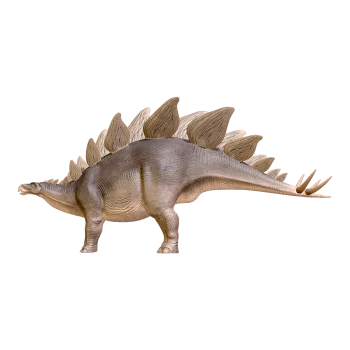
Sword Dragon
The stegosaur is an animal belonging to the family Stegosauridae in the suborder Stegosauria of the order Ornithischia, also known as the Bone Plate Dragon. The head is small, and the tip of the mouth has a bird like pointed beak without teeth. The teeth are distributed on both sides of the mouth and are very small. Jianlong is named after its large sword board and sharp tail spikes on its tail. Jianlong is distributed in China, the United States, and the United Kingdom, and lived from the mid to late Jurassic period to the early Cretaceous period. Their diet is herbivorous. Jianlong is a giant dinosaur with a peculiar appearance, known as the "roofed reptile" by people.

Dragonfish order
It is a large marine reptile similar to fish and dolphins. They lived during most of the Mesozoic era and first appeared about 250 million years ago, slightly earlier than dinosaurs (230 million years ago). They disappeared about 90 million years ago, about 25 million years before the extinction of dinosaurs. In the mid Triassic period, terrestrial reptiles that have not yet been determined gradually returned to the ocean and evolved into ichthyosaurs, similar to the evolution of dolphins and whales today. They were particularly widely distributed during the Jurassic period. During the Cretaceous period, they were replaced by plesiosaurs as the tallest aquatic carnivores.

Tyrannosaurus Rex
Tyrannosaurus belongs to the Tyrannosaurus genus of the Tyrannosauridae superfamily and is the only species in this genus. It was named in 1905 by American paleontologist and member of the American Academy of Arts and Sciences, Henry Osborne. If we refer to the translation format of other dinosaur species, it would be more appropriate to translate its species name as' King Tyrannosaurus'. Adult Tyrannosaurus rex is about 12 meters long and weighs around 7 tons, making it one of the largest land predators in Earth's history.
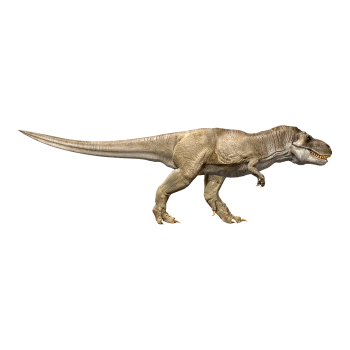
Cretaceous Tyrannosaurus rex
The Tyrannosaurus genus is a member of the Tyrannosauridae family, and the only valid species is the type species Tyrannosaurus rex, also known as the Rex dinosaur. It is a large carnivorous dinosaur with a length of about 15 meters, a hip height of about 5 meters, and a weight of about 8 to 13 tons. Tyrannosaurus lived in the Maastrichtian stage of the late Cretaceous period, approximately 67 to 66 million years ago, and was one of the last dinosaur populations before the Cretaceous Tertiary extinction event. Fossils are distributed in the western United States and Canada in North America, with a wider distribution range than other tyrannosaurids.

Tyrannosaurus Rex
Tyrannosaurus belongs to the Tyrannosaurus genus of the Tyrannosauridae superfamily and is the only species in this genus. It was named in 1905 by American paleontologist and member of the American Academy of Arts and Sciences, Henry Osborne. If we refer to the translation format of other dinosaur species, it would be more appropriate to translate its species name as' King Tyrannosaurus'. Adult Tyrannosaurus rex is about 12 meters long and weighs around 7 tons, making it one of the largest land predators in Earth's history.

Late Cretaceous Triceratops Bones
Triceratops is a herbivorous dinosaur belonging to the family Triceratops in the order Ornithischia. Triceratops is a dinosaur resembling a rhinoceros, with a bulky appearance, thick legs, a head with three horns, a large bone plate extending backwards at the back of the skull to form a neck shield, a short horn above the beak, and two long horns above the eye sockets. Triceratops' horns are defensive weapons. Triceratops are mostly distributed in North America and lived in the late Cretaceous period, approximately 68 to 65 million years ago.

Cretaceous Velociraptor dinosaur small carnivorous dinosaur

Jurassic Triceratops Dinosaur 3D Model
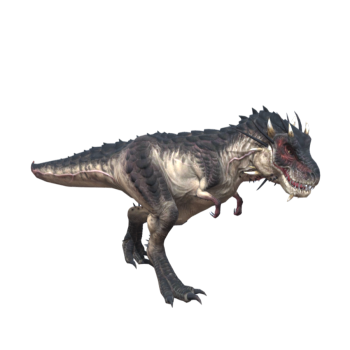
Realistic Tyrannosaurus Rex 3D Model

Jurassic Realistic Dinosaur Stegosaurus 3D Model

Meraxes Gigas Jurassic Dinosaur 3D Model
Paleontologists have described a new species of giant carnivorous dinosaur from a fairly complete skeleton in Patagonia, Argentina. The discovery could help shed light on the mystery of why such powerful predators have almost comical little arms. The new species, named Meraxes gigas, weighs more than 4 tons, is nearly 11 meters long and has a huge skull with a length of 1.3 meters.
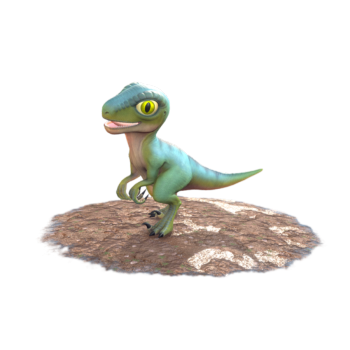
Green Q version cartoon small dinosaur 3D model
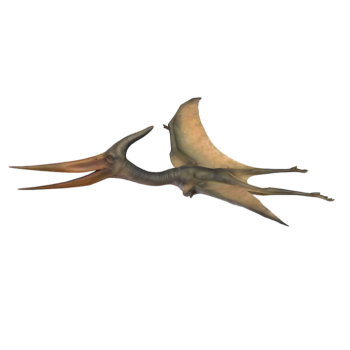
Jurassic toothless pterosaur 3D model

Jurassic Giant Dinosaur Brachiosaurus 3D Model
Brachiosaurus is a general term for the "Brachiosaurus" dinosaurs of the Jurassic period. The body length is 25 meters, the height is 15 meters, the weight is 30 tons, the tail is thick and short, the head is very small, the neck is very long, and the shape is similar to that of a giraffe. There are large claws on the inner side of the foreleg. The jaw is well developed, covered with 52 teeth up and down, and the edges of the teeth are sharp. The limbs are thick and strong. The nostrils are on top of the head. It is named for its long forelimbs.

Popular Models


Honey Badger (3D animated model)
192 View

Guinea fowl (3D animated model)
163 View

Wild Goose (3D animated model)
185 View

Red Fox (3D animated model)
153 View
Random Model

Saint Germain high footed round cup
945 View

Ferrari SF90 Stradale supercar
1096 View

Pinus pineculana
525 View

Purple Radish 3D Model
757 View

Garden single wheel iron cart
737 View


Black Dragon (with 3D animated model)
1172 View